Wednesday, July 13, 2016

Jazzpunk

Jazzpunk
What the Hell did I Just Play?


Jazzpunk is a comedy adventure game produced by Canadian indie outfit Necrophone Games, and published by Adult Swim. That's about all I can say about this game with any sense of objectivity, as your enjoyment of this title, perhaps more than anything else I've played in recent years, is so incredibly dependent on very specific tastes. To be particular - it's a comedy driven title, so if you enjoy the humour, you'll have fun. If you don't, you won't. I was one of the people who didn't, but maybe there's an audience for this sort of thing who'll enjoy the whole experience a lot more than I.

The game is ostensibly set in a alternate Cold War 60's, populated by robots and other anachronistic technologies. You, as Agent Polyblank, are tasked with carrying out a series of vaguely-espionage themed missions aimed at... saving the world... I guess. Really, the premise is nothing more than a set up - a vehicle to place the gamer in front of as many computer-puns, surreal gags and pop culture references as possible. The actual interface and gameplay are very simple - you're given free reign to wonder around areas to solve your task, and there are a few skill and puzzle based sections, but nothing terribly taxing. Mostly you'll be moving through a world of whoopie cushions, spit-takes, vomiting seafood, robots falling over, and non-sequiters, before you eventually emerge at the end of the game, squinting in the sunlight, wondering what on earth just happened.

It's best described as taking the formula of Dear Esther and Gone Home and giving it an extremely surreal comedic twist. Fans of Family Guy and Archer might want to take note. Every one else might want to give it a miss.


This review was first published in Empire Times magazine.
https://empiretimes.com.au/

Monday, September 24, 2012

YOU ARE ALL GOING TO LOVE ME - romance in video games.

So I played through To The Moon the other day. Bawled my eyes out, of course, but more to the point, it got me thinking; what, exactly, makes for a good romantic story in a video game? Is such a thing even possible given the technology we have? And is there, in fact, any way to tie a romance into a video game in any way beyond narrative function (and perhaps a stat boost)? Let's go through this bit by bit, then.

So what was it about To The Moon that worked so well? And was anything about the story something that was uniquely suited to the format? Well, I'm going to have to make a pretty clear call on this one: no, not really. With To The Moon, the player is largely regulated to the position of a passive observer - this is made even more clear as the viewpoint characters aren't really the protagonists of the story - they (along with their plot-device technology) are a vehicle to allow access to the stories' non-linear view of the plot's chronology - the story is most definitely a love story at its core, but what it does so well is to actually present this love story as a mystery. In hindsight, none of the plot revelations should come as a huge surprise - but what it does very well is to set up a huge number of events and objects, whose initial presentation is, at best, unclear (and at worst, quite sinister) - but as you learn more about the character's lives, all the pieces start to click together, until a particular scene pretty much snaps everything into place in a moment of wonderful catharsis. And again, whilst all this is lovely, it's hard to say that the video game format is something that really works in the story's favour - the gameplay mostly consists of wondering around. trying to find the next important thing to click on, and the rest of it is spent trying to solve extremely simple puzzles. I actually found the puzzle bits more of an impediment to my enjoyment of the title than anything, and I'd always try to get them over with as quickly and as cheaply as possible, just to get to the next plot section so I could dig a little deeper into the central mysteries of the story. Apart from the puzzle sections, nothing about this format could not work in the form of a film or novel. Perhaps, though, there could be something to be said for the player being able to resolve the mystery at the own pace making the narrative more involving, but it's a hard call to make - and also there is a certain amount of charm in the 16-bit rpg style visuals that would be hard to portray elsewhere without very careful visual direction.

Perhaps, though, one thing that makes the story of To The Moon something of a stand-out in the world of video games is that the relationships between the characters is the absolute core of the plot. Though there are some titles which have a romantic sub-plot (or sub-plots), for the vast majority of these titles they are, at best, window dressing to whatever the central conflict is (usually good vs evil, human vs nature, human vs technology or some derivative thereof). That's not to say that they are without their charms - certainly, the romance sub-plots in many Bioware titles can become oddly involving, but after you look at them past all the sweet confessions and awkward avoidance's, it becomes pretty clear that there isn't all that much substance to them.

Perhaps I should explain what I mean by a lack of substance, here. Love stories, at their heart, are the stories of people relating to each other, usually in a romantic context (there are love stories about other kinds of love, of course, but they tend not to be as numerous - most of the tropes carry across, anyway, so there's no real need to go through them individually). Thus, they are probably the most character driven stories imaginable - though it's quite possible (and, indeed common) to create some kind of external problem or threat to give meat to the story's character conflicts, the very best and most interesting kinds of conflicts are those born from the characters themselves - not the least of which because, with interpersonal conflicts, it's very difficult to simply kill the evil space-fortress and end the threat (even in a metaphorical sense). So the task becomes - how does one create believable (if not realistic) conflict resolution for these kinds of problems? Though perhaps this, in itself, is a bit misleading - perhaps it's not the conflict itself that needs resolving in these kinds of stories, but the conflict WITH the conflict - characters learning how to accept (or not accept) each other fully is often possibly the most honest resolution one can have to these kinds of conflicts. This kind of nuance is something that would be very difficult to portray in the video game format - it's been noted in several places that in games that have love interests, they tend to fall into one of two formats - either the object of romantic pursuit, or a piece of emotional impetus. I found it somewhat amusing in the Mass Effect series that, though you could carry romances across multiple titles, when each new title came out the writers had to think of a new way to keep the romance interesting. Take the first game, for instance - you're given a choice of two love interests per sex (one character being romancable by either sex). The romance in these titles follows the pretty standard video-game romance format (with the added bonus of the player having some direction of the course of the romances) - that is to say, they are all about the first state of the relationship - the pursuit. If your character is pursuing two characters at once, you are eventually forced to make a choice between them (or have the choice made for you). By the final act of the story, the object of your affections will eventually return them, with the standard kind of physical affection that's usually portrayed as the 'payoff' for these kinds of stories. So far, so standard. However, when we move onto the next game (complete with the feature to 'carry over' plotlines from the first game via an old save), we start to see the cracks form in this format. First of all, all your previous love interests are sidelined for the duration of the title, regulated to cameos and the like. You are also presented with a largely new cast of romance options - and in doing so, makes the limitations of these kinds of romantic storylines in video games clear.

Video games, are, largely, goal-oriented excersizes. You are given (or you give yourself) a task to fulfill, and then - working within whatever boundaries the game prescribes - you attempt to complete it. You'd be hard pressed to find a video game which didn't strictly adhere to this premise - indeed, there could be an argument to be made that without some sort of goal to focus on, there isn't really a game at all. Thus - though many video game romances of the pursuit ilk can have layers of witty dialogue and decent characterization to give them some weight - in the end, once you've reach the 'end' of the romance, and have secured your paramour's affections - there are no more goals to be found, there. The 'spark' is gone - the chase is over, the conflict is resolved. There seems little more for the narrative to do - so, in Mass Effect's case, its solution is to move all the old love interests out of sight for a time, and present the player with a new set. The player may choose to stay faithful to their previous love interest in they wish - but there is very little in the way of on-screen interaction between them and the protagonist. When the third and final game in the trilogy came around, you are again given the option of carrying over the previous storylines, including your various romances - and several of the romances return in full story roles. However, even for the returning characters, the romance had to be 'reset' - especially true for the romances carried over from the first game. If you wish to continue that romance, you are required to 'win' them again. This, I think, amply demonstrates the problems with this kind of romance approach - by make the object of the protagonists affections an, - well, an objective, the narrative has pretty much no where to go once it's obtained.

As mentioned, the other way that games tend to use love interests is to have them killed off early in the story to provide character motivation. And again, no matter how well you write this character, if their only purpose in the story is to die, it's going to be very obvious (and feel pretty cheap) to even the most mildly savvy viewer.

There are few games which will even attempt to approach relationship dynamics in a different way - a notable exception is Catherine, a game I just completed recently. Though heavily stylized and containing many supernatural elements, the core conflict - that of comfort and stability vs freedom and passion - is something that most games will seldom even attempt to address, as these kinds of issues are something that only really begin to rear their hand in a ongoing relationship. The game's far from perfect in this approach (a lot of the choices come down to the same kind of simple binary morality that video games have been doing for years), but it deserves a bit of credit for at least attempting to address something which most games don't even want to think about.

Another game which had some fairly interesting romance options was Dragon Age 2 (another Bioware title) - though the characters themselves are all pretty much archetypes (though no less fun for that), it's the first time I've seen the standard 'warrior therapist' role that most rpg protagonists fall into being, in the instance, a complete failure. Over the game's 10-year time-span, you can become engaged in the lives of several deeply troubled characters - however, wherein most games, under your influence they would be able to 'solve' whatever's troubling them and come out better people, in Dragon Age 2, 3 out of 4 romancable character do no exhibit any improvements- one of them, in fact, becomes a lot worse. Though these characters can be encouraged to share their stories and emotions with the player, they actually have something of their own agency. Many people will find this off-putting - part of the reason many people play most video games is to fulfill particular fantasies, after all - to experience the freedom that comes with power, be it through strength, or charisma, or some other virtue. To have a game where your character is, in fact, powerless to influence the outcome of a particular narrative arc, to change the course of a character's life how you want it - this would fly in the face of many people's ideas about what they play games for.

However, the fact remains - as long as narratives are centered around goals and power, characters within these narratives will have to follow suit. In To The Moon's example, it largely removed these characteristics (goals remain, but they are simple to reach) - but by doing so it allows the narrative to move in directions that one seldom finds in this particular medium. It relies on strong engagement with the characters to keep the player interested, but sacrifices much in the way of interactivity. Is there a way out of this particular design trap? Or is the best we can hope for to be charming stock characters? I think, at the current level of technology, it might be impossible - and the constraints of design being focused creating characters the fulfill the player's fantasies will also limit developer's choices. Titles like To The Moon and Catherine are both interesting experiments that are perhaps best admired for the experimental natures than for the final product - though To The Moon presents a wonderful story, it would be very hard to recommend it to someone just as a game. If people were more willing to accept characters who have their own agency (or at least the illusion of agency), things might start to change, but as it is, we'll probably just have to settle for every eligible character in a given title falling over themselves to get the player's attention, before being quietly sent away or dramatically murdered in the sequel. In my view, writing a love story works a lot better without having to cater to the player's potential desires.

Sunday, July 29, 2012

Toxic Memes - Angry, angry nerds

Recently, I posted a link on my Facebook about the vicious negative reactions that feminism receives online. Few things would bring all the boys to the yard than a woman getting angry about the way when are represented and treated in video games and the surrounding cultures - and the kind of vicious hate that would boil forth sometimes has to be seen to be believed. There is a culture war in video game/geek culture, and blogs tend to be the front lines. What follows is a good chunk of my thoughts during the discussion; as I attempt to conceptualize and explain why feminism (and women in general) get such visceral and hate filled responses online; I think it encapsulates a good deal of my thoughts on the matter.


------------


I think, in some ways, 2nd wave feminism was a little too successful in (some of) it's aims. We've had a whole generation of men growing up internalizing these [feminist] messages, but instead of breeding a newer, fairer world, what we've ended up with is a lot of muddled messages, and a lot of men simply not know how to behave towards women. The internalized dichotomy of male/female, oppressor/oppressed, perpetrator/victim, good/bad has resulted in a peculiar sense of self-loathing amongst the male mindset - we're part of a system that hurts woman; okay, most people will be able to accept that, when pushed; but what throws men is that we will still encounter women who are deeply entrenched in their ideas of what men and women are supposed to be, and yet still throw all the responsibility on 'men'. As though 'men' are consciously attempting to create and maintain this system the way it is. What causes a lot of blow-back and hurt feelings is that a lot of the time it seems to men like women expect us to 'treat them better' (and what that means is going to be hugely subjective), but are completely unwilling to let go of their own harmful ideas and behaviors towards men.

How often have you encountered women who are ready to explain any and every misdemeanor as being just another part of our eternal quest for sex? How often have you met women who are so paranoid and mistrustful of your intentions that, no matter what you do or say, they'll always come back to the same base thing? How often have you seen communities of women support each other, whilst at the same time vilifying men as being no more than confused children, slaves to their most basic desires? The old ideas of men doing nothing be being shiftless and lazy, doing anything they can to avoid housework/time with their children/working too much (probably with their secretaries)/paying their wives any attention? Eat the beef and watch the sports. Why is it, in a liberated world, is it still considered 'gentlemanly' and appropriate to pay for dinner on the first date? Why is the expectation of the household provider still often largely on the men's shoulders?

Many women will deny this, of course - they don't think this way, they know it's wrong! And that's my point - NO ONE (beyond the most vile of the lunatic fringe) actively believes in oppressing and hurting other people. But - because of the way our culture operates, because of the messages we internalize, the EXPECTATION, the OBLIGATION remains. Part of it's just being young, I suppose, but for a lot of men who internalized this particular dichotomy, women end up being placed on pedestals - glorious beings of light and perfection, who are in an essential way, wiser - or just plain better - than us. Bullshit, of course - women are just silly little flesh-bags, like all of us, fumbling around in the dark. But sometimes that kind of idealization leads to a deep-seated resentment when the reality cannot live up to the image - and now we've got a lot of men very confused about who and what they are, and about what their role in society is, particularly alongside women. And they see women who are attempting to speak about the problems facing them - and they see women who are perfectly willing to cast the responsibility for the way things are on others, whilst next-to-no-one gives genuine voice for the anxieties and issues facing men- and they are hurt, and angry. What makes them so special? Why do they deserve this special treatment? And so we end up where we are.

I some ways I think the way people speak about gender needs to change - very often, men are spoken about in stereotypes, half truths, and 'common sense' facts. The tropes, ideas, and expectations that confine us and who we are supposed to be are still very strong - men don't talk about their feelings, men don't go to the doctors, men don't ask for help. Men put a lot of their energy into fulfilling this idea of strength and stoicism - stepping outside these very narrowly defined boundaries is grounds for marginalization, dismissal, and ridicule. Men who appear weak are treated with scorn - men who don't aggressively pursue sex-as-conquest are treated as deviants and freaks. Men who are interested in anything other than mainline alpha-male pursuits and activities are belittled, ostracized, and ignored. We receive these messages from everywhere, from both sexes, and whilst feminism gives women a platform to say 'this is bullshit', men do not have that kind of organized support system.

In short, I think the way society views genders is still much too narrowly defined, and causes pain that does not need to exist. It is everyone's responsibility to change this - feminism is just one aspect. It's not a tool of oppression. However, the people behind the movement are just that - people. Feminism is not a single ideological bloc - there are different ideas, factions, agendas etc etc. Very few of them are based on outright misandry, I believe - though there are certainly bits of that here. In short, feminism isn't the enemy - but there should be space made for male perspectives in a feminist discourse, or else it just becomes one huge circle jerk. Women/men aren't the problem - people are.


------------

I think a big part of the problem is that, growing up, men construct much of their identity around what they think women want them to be - not necessarily as sexual/romantic partners, but as 'decent men' - of course, that was always present to some extent, but the feminist ideas that we internalized growing up has given the matter perhaps more urgency than previous generations. We spend a lot of time defining ourselves by what we DON'T want to be - the aggressive, arrogant, alpha-male, who ignores, dismisses, uses and abuses women, who treats them as a tool for his emotional and sexual gratification - a classic narcissist.

The problem is, of course, that by doing this, we, in some ways, retard our own development as human beings - we are afraid to 'want' anything from women, as that is, from our perspective, tantamount to abuse. We use women as some kind of measuring stick - not in the sense of how many we sleep with so much anymore, but as testers and evaluators - as things that can tell us whether we're preforming our roles as human beings and men correctly. We give so much of our sense of self over to women, that we deny ourselves the pursuit of anything. And naturally, the id does not like this. Though there are always exceptions, generally speaking a heterosexual man wants sex - or more to the point, he may want whatever emotional payoff he would get from sex and/or a relationship. Part of this is because there's an awful lot of pressure put on us - the romantic relationship is very much idealized as something that should be striven for at all points throughout your life, regardless of your personal physical or emotional circumstance. And even the basic sex drive is STILL championed as a sort of measure of your masculinity.

If it seems like I have just contradicted myself, it's because the dualistic images of masculinity - what we 'were' (driven by sex and/or power) and what we 'want to be' (respectful towards women) sends us a lot of contradictory images about what men are, and how we are supposed to function as human beings, particularly with regards to women. And thus, when we see men who ARE aggressive in their pursuit of women - and when we see women responding to that pursuit, even condoning it, it feels like a betrayal of every idea we had about what we thought women wanted. Rather than beings who wanted respect, they become the image of the narcissist, the spoiled brat who expects everyone to work towards her ends, but does not want to understand or respect the fact that we behave in a quiet, restrained way for HER benefit - we feel like our efforts are unappreciated (and it often IS an effort), and from that, a resentment builds. And from there, it's only a hop, skip and a jump to the kind of rampant abuse you see bubbling up online all the time.

Naturally, the problem is that a) many women cannot really empathize with this situation, as they are unlikely to live it in the same way men do, and b) even if they did understand it, expecting affection in exchange for good behavior is still treating the entire arrangement as a a transaction, an economic exchange - I'll give you X if you give me Y. And whether that's the old arrangement (an exchange of provision and protection in exchange for progeny and sex) or a new one (say, exchanging good behaviour for affection and validation), it's still reducing the target of your interests to an inhuman device, which ignores their own agency - that they may want something else besides what we think they want.


---------


And that seems to be a good collection of my thoughts on the matter - I could try to organize it into a more formal structure, but I don't think I've repeated myself too much, so I probably just leave it as is for now.

Monday, May 14, 2012

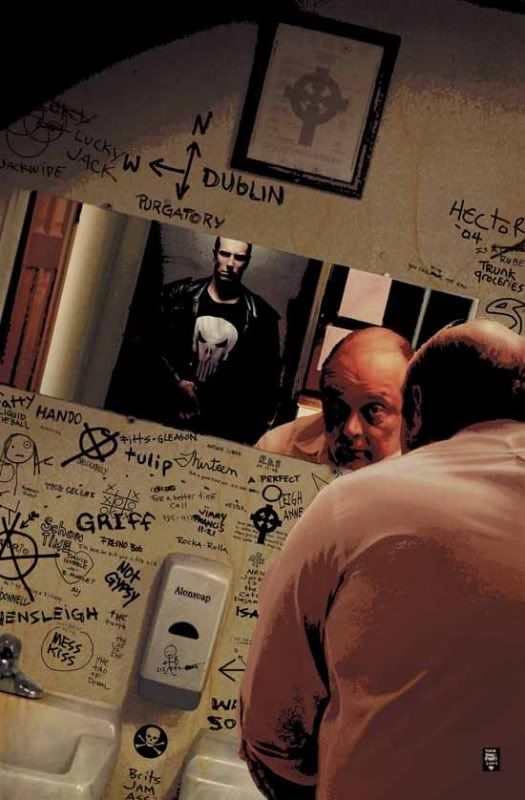
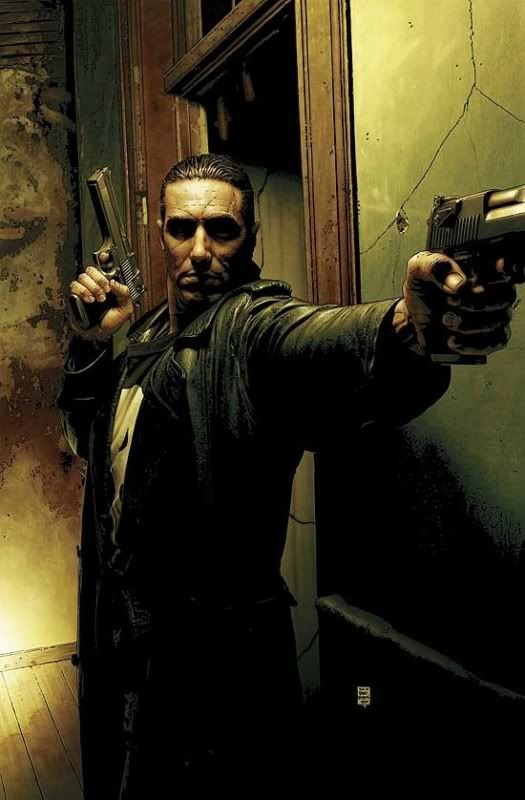
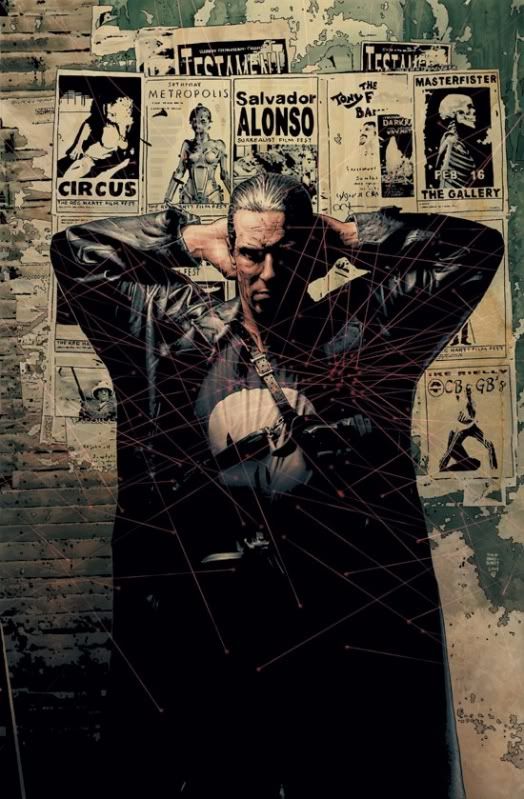
Comic Review - The Punisher (max series)


This is the second Garth Ennis series I'm having a look at during the blogs' nocturnal meanderings - which may give you the impression that I'm something of a fan. I'm not really - I'm not too crazy about his most popular work (which would be Preacher, unless things have changed), and there's a lot of little idiosyncrasies about his writing that I find annoying. Which might be the main reason I love his Punisher Max series so much - it's allowed him to play to all his strengths, but lacks the kind of storytelling scope that lets him indulge his more... particular sense of humour (alright. I don't like toilet humour. So sue me) - if he did, he would have ruined the mood he spent 60 issues piecing together. So props to Ennis for showing restraint when it betters the story... though restraint is very much a relative term, of course.

The Punisher, then, is a series of tales of Marvel's urban vigilante. MAX is Marvel's 'adult' imprint, which both allows the writer to cover subject matter which the mainstream marvel stuff barely touches upon in greater depth, and also frees the story from the immense weight of decades of comic continuity. Which isn't to say that Ennis' Punisher lacks for history - far from it. Which is one of the most appealing factors of this series.

See, The Punisher, one Frank Castle, is a Vietnam veteran. This was how the character was conceived when he first showed up in the 70's, and this is a huge part of his background in this series. Don't worry about reading anything else written about the character - the series stands on it's own, and exists in a completely separate universe - but Frank Castle is still a Vietnam veteran - and he's been doing this urban vigilante gig for a long time (about 30 years, all told). The most interesting thing this series asks about this fact is this - one kind of man would actually be able to keep up this kind of daily carnage for almost three decades? What kind of man could come home from what is one the the world's most controversial conflicts and, in fact, keep fighting? The original premise had the character swearing vengeance (or perhaps that should be punishment) on crime after the death of his family, victims of a random shoot-out between gangsters - but after 30 years, that would wear a bit thin on most people's psyche. After all, everyone directly (and some indirectly) responsible for his family's death he personally put in the ground long ago. And his one-man war on crime, though devastating for individual criminals, has never done much about crime in general - he's tough on crime, but doesn't care about the causes of crime.

So, why?

The series offers up a variety of answers, which is where the real meat of the writing lies. Sure, there's some neat little one-liners, fun fire-fights, colourful villains, and the general quality dialogue that Ennis has become rather good at over his career, but for me, at least, the most fun is in the character deconstruction. Not development - Frank doesn't (can't?) change; but even with a static character, you can put him through the emotional wringer, and tease out and torment the little bits of humanity left inside him. Because that's what I found most interesting about this series - it's not exactly saying that there's a little good inside of everyone (or some such rather trite statement), but it demonstrates that even sociopaths have certain human qualities. The series under Ennis never really tries to portray Frank as a hero - he does go out of his way to ensure that innocents are never the victims (targeted or collateral) of his rampages, and he does help out others from time to time, but Frank does not have a spark of what might be considered good within him. Empathy, yes, at times - but he's so far removed from normal human emotions that it takes a real shock to the system to bring him back towards them (and usually when that happens, it's bad news for any criminals in the immediate vicinity - his encounter with a sex-slavery ring being a prime example). He's essentially a machine, acting out a nightly ritual with skills given to him by the American Special Forces, and it's a credit to Ennis that he never really gets boring.

The other interesting part of The Punisher is the world he inhabits, and how this world informs him and the people he encounters. There are few recurring characters in this series - Allies tend not to stick around for long, and not many antagonists survive more than one story arc. Most of the characters are organized criminals (Frank doesn't really care about low-level racketeering and stuff - his main interest is in the organized criminals - the people who've profited most from crime that they build entire industries and empires on it) or members of the intelligence community (who maintain some form of association with Frank on account of his background, and his skills). This allows the story to occasionally step outside the grimy New York settings, and do a little world-hopping - usually to do a favour for a former ally, or to pursue a particularly powerful enemy. But the most interesting stories use his past as a backdrop - in a way, the Vientam war shadows every action Frank takes, 'til the final story all-but-explicitly states it: Frank Castle is in some ways a perfect storm of suvivours' guilt, indomitable will, shell-shock and war-junkie. A machine fueled by pain, that performs acts of barbarity for all-too-human reasons. And though the story never really moves Frank into the arena of pathos (and nor should it), it's not too hard to see Frank as, in some way, a victim of circumstance. Every major step in his life has been fueled by horror, by trauma - and as long as there are those who indulge in horror-for-profit, men like him may be created. And though some of the comparisons between the Vietnam War and America's latest excursions in the Middle-East aren't exactly nuanced - there's a lot of the same kind of tropes that surround these conflicts that The Punisher examines. The world (and specifically, America) did not learn from Vietnam - and the monsters that this latest crop of conflicts will create do not bear much imagining. My own family background made this elements stand out more prominently in mind my - though I can't imagine my Vietnam Vet father really enjoying the series (he's never been much one for fiction, or to the best of my knowledge, comic books), many of the sentiments he's expressed I've heard echoed in the writing of this title. For a series that's essentially one part puerile-revenge-fantasy mixed in with a lot of 80's-style action and some heavy-handed neo-noir overtones, it packs a surprisingly solid emotional punch at times.

So all credit to Garth Ennis for moving me with the story of a sociopath - without relying on gimmicky pathos, and showing restraint towards his more annoying writing tics, he's buried a very human story under a million spent shell casing, several hundred gallons of blood, and enough mobster corpses to fill New York harbour.

As a follow up, there have been a few other Punisher MAX titles following the this one's heels - none of them are quite as good as the original, but it you still hunger for more upon your completion of this series' 60 issue run, Jason Aaron's 22-issues make for a worthy-follow up (and, perhaps, conclusion) to the story of The Punisher - but I still like this original run the best. Cool covers, though.

Sunday, April 29, 2012

So I guess we know who they're Avenging now - Avengers Film Review


So yeah, The Avengers is good.

It's better than all the other Marvel Film Universe productions that've been put out thus far, and doesn't have the same kind of major structural problems towards the third act, so that's nice. All the characters are well-drawn - not well developed, because that happens in their own films - but they're consistent with their previous portrayals - and I actually think I like Mark Ruffalo better than Edward Norton as The Hulk, so that was a pleasant surprise. And slimy little creep Loki makes for great fun as a villain that's not quite as great as he thinks he is, but is still legitimately dangerous enough to be a real threat without turning into a parody.

It's most definitely a Whedon film - enough of his narrative ticks are present that it really couldn't be anything else. I also approve of the Chekhov's swag that finally pays off in this film - so many little things from the other films end up being relevant, it makes you wonder how much was actually planned, and how much is just an example of being able to draw plot elements together in an effective way.

The writing's what you'd expect from Whedon - funny, quippy, with the occasional shocking swerve into gravitas (which is probably the main thing I like The Hulk for). This sort of dialogue is perfectly suitable for the universe, so even though there's a couple of lame lines, there's nothing that throws you completely out of the moment.

I also think there needs to be a S.H.I.E.L.D film - characters like Nick Fury and Natasha Romanov are demonstrably strong enough in this film that it really seems obvious that they could carry a narrative all by themselves - they've had all their development in other character's films, but dammit, they're cool, and I want to see more of them! There's also a slight psychological element, chiefly exemplified by Banner's emotional issues and Natasha's mind-game espionage gambits) - not as heavy as in Whedon's other stuff, but it's glanced at, and acknowledged, and the effort is appreciated.

Lots of action, of the super-hero variety - lots of back-and-forth, giving each character a chance so shine in their own way. Which is really what the whole thing's about, of course - the ensemble. And in that sense, the film's as good as could be possible, I think. There's also a lot of comic-book logic - that's the main issue that'll lock audiences out, I believe. You can either roll with the silly elements and the random pseudo-science, or you can't. If you can't, you miss out of things like The Hulk destroying a giant bio-mechanical space-ship with one punch, and I just think that's sad.

It won't blow you away, but it's rock solid, well written, well performed, and full of cool little details that pretty much make this the zenith of popcorn entertainment. If you want to give your inner child a treat, check The Avengers out.

Wednesday, April 25, 2012

What the hell is that noise?

JUST FOR FUN: Time for a musical tour through Silent Hill. I shall be posting the intro tracks, and other others I think of note.

For once, I shall keep it all in the same thread. Haha, lies - this was originally going to be a Facebook post, then it kind of expanded. Possibly  bloated.

So, without Further ado - here's a big reason why I love these games. And it's mostly the fault of one Akira Yamoaka:

Silent Hill


Intro track:

I also dig the intros themselves. Very vague and ambient, but strangely surreal and slightly uncomfortable.

This one was nice, too. Plays when you get the best ending:

http://www.youtube.com/watch?feature=player_embedded&v=2UJOl1P4KQw

Here's another good one for a pretty sad scene:

http://www.youtube.com/watch?feature=player_embedded&v=owDMFLSBtsg

Isn't all that low-fi acoustic melancholy nice? By the way, here's a digitally warped dentist drill:

http://www.youtube.com/watch?feature=player_embedded&v=tY92NAdGaR4

which makes for pretty interesting feeling (ie UTTER PANIC) when fighting Mr Final Boss. Joy.

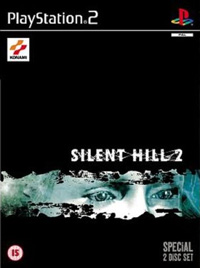
Silent Hill 2


Probably my favourite intro and track:


HD version because the voice acting is better.


This one is possibly my favourite track in the series:

http://www.youtube.com/watch?feature=player_embedded&v=6qalGezr76o

The theme for Maria, incidentally. Who's Maria? That's... a difficult question to answer.

And I don't always have a final and inevitable and inescapable confrontation with my inner demons; but when I do, I do it to this track:

http://www.youtube.com/watch?feature=player_embedded&v=8zq2VSlgFwI

Silent Hill 3


Things get a bit more upbeat for the next game:


Well, musically, at least. As far as 'horribly grotesque things happening' goes, 3 probably takes the cake.

3 also saw the introduction of Mary Elizabeth McGlynn on vocals, which I think works quite well, as well as lyrics written by Joe Romersa. Hint - if you're a Japanese developer writing about the adventures of English-speaking characters in an American town, hire some American audio support.Because then you get tracks like this:

http://www.youtube.com/watch?feature=player_embedded&v=vRZcdnWH8Do

Which sound rather nice.

Oh, who likes Industrial Electronica? I do! I do!

http://www.youtube.com/watch?feature=player_embedded&v=jiY6cN1p2PE


Silent Hill 4: The Room


Here's the Silent Hill 4 intro. Watch and enjoy the feeling of not knowing what the hell's going on, but knowing that this stuff just ain't right.


Also, the menu music:

http://www.youtube.com/watch?feature=player_embedded&v=Jce3Frxot9s

Don't worry, man. I'm sure you'll be able to fix your guitar one day.
 
And then we get grungy guitars, with smokey vocals. When you're singing about having your mind ripped
away by events you only scarcely comprehend, it's always nice to have the appropriate vocalist.

http://www.youtube.com/watch?feature=player_embedded&v=OqVRYsTT7bY

I hate you wall of creepy baby-things, I really do. :(

More niceness:

http://www.youtube.com/watch?feature=player_embedded&v=aKMksGsv-9U

And, finally, what is probably the main theme of the game. It's not a terribly happy song, but that kind of fits, really.

http://www.youtube.com/watch?feature=player_embedded&v=PMvOkUMPZ0g


Silent Hill: Origins


After crossing the pond to America, a few things about the series changed, but series composer Akira Yamaoka stayed on - which I think is a very good think.

Origins doesn't have the same kind of music video introduction as the rest of them, but it does have this:


...which I'm including for the sake of completeness. However, the must that you can hear playing there? It's pretty awesome, and continues to play as you make your way through the opening scenes of the game:

http://www.youtube.com/watch?feature=player_embedded&v=3FqZ9AezbB4

We also have this little number, just to make everything seem more like Twin Peaks than it already did:

http://www.youtube.com/watch?feature=player_embedded&v=q-aJ6MNfEZ0


The ending tracks are very good, too. This one might be my favourite:

http://www.youtube.com/watch?feature=player_embedded&v=qooX7hLtMtg#t=23s

Silent Hill: Homecoming


Just when I think the old days of vague video sequences without context were over, they make a smashing return for the second American developed title:


Oh vague and incomprehensible intros, I missed you and I'm glad you're back.

And then some friendly robots made us this song after listening to too much Regurgitator:

http://www.youtube.com/watch?feature=player_embedded&v=Uc_MTu2ZfMg


And this one is possible the only time I've ever heard the sound of drowning be incorporated into a song. Cheerful fun!

http://www.youtube.com/watch?feature=player_embedded&v=03h2B2ZbJ88


And I dig them heavy, angry guitars. Homecoming, I don't know why you're so grouchy at me, but I dig the way you've incorporated the old Silent Hill motif into the background, there.

http://www.youtube.com/watch?feature=player_embedded&v=_8CzrRDjhMw

Silent Hill: Shattered Memories


More inexplicable strangeness, set to rock music. Is there a theme here? Well, yeah. Yeah there is.


In a first for the series, we also get a cover - in this case, it's 'You are Always on my Mind.' They made it sound much darker and somehow sinister. Groovy.

http://www.youtube.com/watch?v=FJtBXW4abRI&feature=player_embedded


And this last track, which has been known to work certain emotional effects on my person, simply because of the context of when it's played. This game has one of those stories that's actually definitely enjoying unspoiled. So I won't.

http://www.youtube.com/watch?feature=player_embedded&v=CL0u9_gNUX0


Alright, fine. It was the butterfly, I tells ya! The butterfly!


Silent Hill: Downpour


Sadly, with this game we see the departure of Akira, and his loss is definitely felt. Dexter composer Daniel Licht is brought in as he replacement, and whilst he does a decent job, there is a marked disconnect between the music of this game and the earlier ones. First of all, the intro track is by Korn. Yeah, I know.


Strangely, I don't find myself hating it, but I don't find it anywhere near as engaging as the old tracks.

The soundscapes presented in this chapter are a lot more minimal than the old games - truth be told, I'm not crazy about them. A good example of the sort of thing on offer can be demonstrated by the menu track:

http://www.youtube.com/watch?feature=player_embedded&v=YhL6S7loE9U

So, is that it for wonderful Silent Hill music? Well, I'm actually strangely hopeful. Mixed in with a lot of forgettable music, we get a couple of cool tracks, like this:

http://www.youtube.com/watch?feature=player_embedded&v=c8wDcDPh4Ms

Doesn't that sound bad-ass? I think so. I could totally walk out of prison with my head held high to that. I like to consider it the main character's theme.

I am also fond of the 'sprong' noise you hear in this one, and the angry electronic guitars. Hell, the mandolins played thought the whole game are quite lovely

http://www.youtube.com/watch?v=Oz24zb3Aclg&feature=player_embedded


WELP. That's it. What started out as a silly Facebook post has become a minor project of a few hours effort. The things I do for you. Well, okay, let's face it, me. But never-the-less, I hope the point is made. The music for these games is pretty damn awesome, and I hope you've enjoyed some of it.

Friday, February 17, 2012

GAME REVIEW: Dear Esther

Dear Esther is an indie game, an adaptation of a Half Life 2 mod. You 'play' it by walking around a seemingly deserted island, exploring, and listening to a narrator. That's it. It's not really a game; more a short story you walk through. That sentence should tell you whether or not you'll be interested in trying it out.

As a mood piece, Dear Esther was interesting. Given my tendency to spend a lot of games just wandering around and exploring, this particular product felt entirely suitable to me. How effective it is going to depends on a lot of variables - not the least of which is how much you're prepared to engage with it. Get comfortable, wear headphones, maybe dim the lights - and maybe Dear Esther will convince you to slip into something more comfortable.

The dialogue is, unfortunately, often clunky and over-written - though perhaps this is intentional. Emotions can be melodramatic things, and Dear Esther is clearly meant to bypass your rational processes and attempt to envelope you on an emotional level.

As a minor meditation on guilt, grief, and lingering melancholy, it was effective enough. The bleak scenery, the mournful music, and the vague symbolism that inhabits the world managed to work some effect on me. I couldn't really tell you what the plot was - it doesn't really matter. There was death, and trauma, and a sense of loss so pervasive that you don't even really need to know what caused it to know that it's there.

On the technical side, the Source engine does the job. The scenery is starkly beautiful at times, and the soundscape layered and effective. The music is brooding, largely minimalist, and appropriate. I couldn't find a major technical fault with it, other than that perhaps some of the items scattered about were harder to examine than I feel they ought to have been. Perhaps the game could have made use of a way of interacting with and examining objects, or a least a more powerful zoom.

Who's going to enjoy this game? People looking for a different way of telling a story. I think that one day we'll see more products like this, who take what Dear Esther has tried to do, and work it in a far more effective manner. That's not really a poor reflection on Dear Esther - it very much feels like an experimental piece in a developing medium. It will appear more basic, pretencions, and insubstantial as time goes on, but I think its' heart is in the right place. If you want a spend a couple of hours exploring an emotional mind scape (literally or metaphorically, I haven't decided), give it a go.


A link to the devlopers site, for the curious:

http://dear-esther.com/